Annuaire
Recherche
RESEARCH AXES
Chromosome organization & dynamics [PI: D. Jost]
The chromosome architecture inside cell nuclei plays important roles in regulating cell functions. There are now proliferations of experimental studies which report the hierarchical organization of chromosomes and how this non-random folding plays a role in gene regulation. However, the mechanistic principles that drives such higher-order organization are not fully understood. In close collaboration with experimental biologists, we are developing quantitative polymer models in various organisms to better understand the coupling between 3D chromosome organization and dynamics and biological functions.
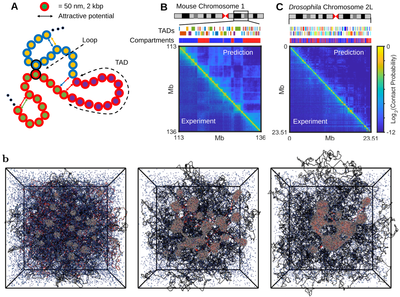 Fig.1: Polymer models and simulations of chromosome organization
Epigenetic (de)regulation & Health [PI: D. Jost]
Accessibility of transcription factors to promoter is controlled by biochemical modifications of DNA or histone tails which modulate gene expression without alteration of the genetic information. Propagation, maintenance and inheritance of these epigenetic marks are crucial mechanisms in development, cellular homeostasis and disease. With molecular biologists and clinicians, we are developing computational methods and mechanistic models to better characterize epigenetic regulation in normal or cancerous cells and the coupling with metabolism.
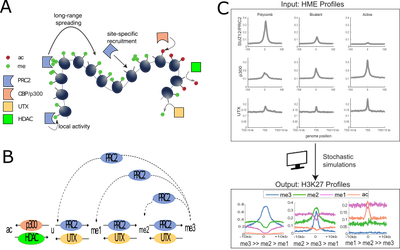 Fig.2: Stochastic models and simulations of epigenomic regulation
How can an actively transcribed gene become stably repressed across cell divisions? [PI: G. Fourel]
This question lies at the core of cellular differentiation, during which distinct gene expression programs are progressively established and maintained.
Together with a large scientific community, we have addressed this riddle in Saccharomyces cerevisiae, the first organism with a fully sequenced genome, beginning in the 1990s. As illustrated in this scientific animation, stable gene repression does not arise from local changes alone, but from a reorganization of chromatin at multiple scales, critically involving heterochromatin factors, specialized DNA elements, and long-range interactions between chromatin regions along the genome. A theoretical framework thus emerges for a potentially universal, dynamic mechanism of genome organization, underlying the partitioning between euchromatin, where genes can be expressed, and heterochromatin, a compartment in which gene expression is rendered nearly impossible, while retaining the potential for reactivation.
Ce lien peut servir de légende ou pour le téléchargement de la vidéo ou peut être enlevé
Why animation ? Over time, the scientific community has accumulated a vast body of data, results that are often used at a given moment and then, in part, set aside. This has likely never been more true than today, for multiple reasons that extend beyond the increasing number of researchers worldwide.
In this context, we decided to take advantage of a medium still underused in science, scientific animation. By focusing on a simple scenario, a gene that is initially expressed and must become repressed, we revisit a set of basic, well-established principles in gene regulation, chromatin, and genome organization, before ultimately introducing a new one. Because the cell lives, the drawings must live as well, to convey the dynamic mechanisms of life.
Funding
Work in the lab is funded by Agence National de la Recherche, CNRS, ENS de Lyon, PEPR Cell ID.




Networks
The lab is part of several national and international networks: GDR ADN&G, GDRI EpiGeneSys3, COST International Nucleome Consortium.