
 Directory



High-Resolution 3D Microfabrication: Pushing the Boundaries of Precision
At the Laboratoire de Chimie (LCH), we specialize in two-photon direct laser writing, a cutting-edge additive manufacturing technology that enables the creation of intricate 3D structures with sub-micrometer resolution. This precision is achieved through two-photon absorption, a process that confines chemical reactions to tiny volumes, allowing us to build complex micro- and nanostructures.
Our Expertise: Bridging Chemistry, Material Science, and Engineering
Our team’s strength lies in its multidisciplinary approach, combining expertise in molecular engineering, photochemistry, and materials science. This synergy allows us to tackle challenges at the intersection of fundamental research and applied technology.
Innovative Photoinitiators for Faster, High-Resolution Fabrication
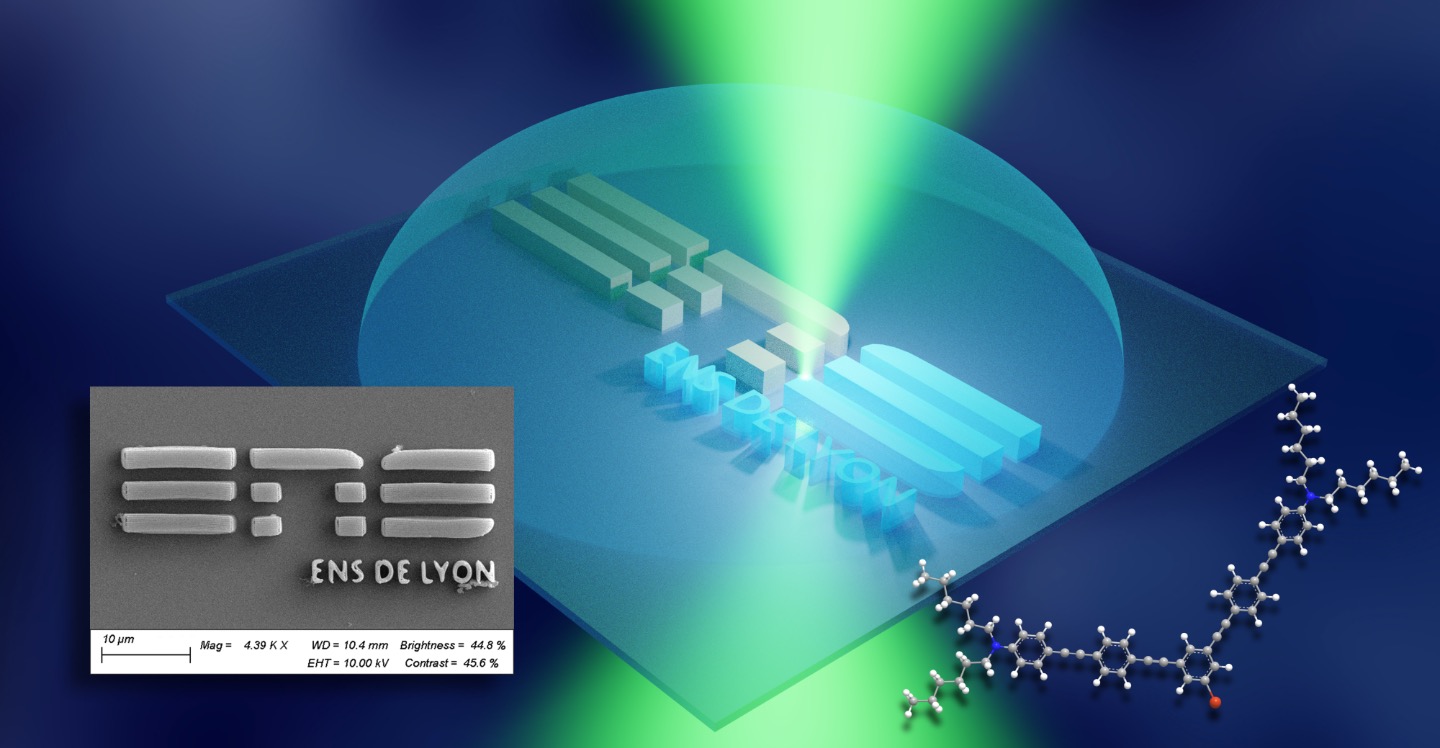 We design and synthesize high-performance photoinitiators — molecules that trigger polymerization when exposed to light. These photoinitiators are optimized for low fabrication thresholds and high-speed processing, making them ideal for advanced microfabrication.
A standout example is our Vshape dye family, which delivers exceptional performance across a broad spectral range (800 nm and 500 nm). When incorporated into photoresists, these dyes enable unparalleled resolution in microfabrication, setting new benchmarks for precision and speed.
Pushing the Boundaries: Parallel Fabrication and New Concepts
To accelerate fabrication, we have pioneered multibeam, parallel processing strategies. This approach requires a deep understanding of the underlying physico-chemical processes — such as activation, polymerization, termination and inhibition — to avoid proximity effects that could compromise resolution. By mastering these processes, we have unlocked new possibilities for high-throughput microfabrication.
We are also exploring innovative photoinitiator systems, such as triplet-triplet annihilation-induced microfabrication. This groundbreaking method significantly reduces fabrication thresholds compared to traditional two-photon absorption techniques, opening new avenues for high-efficiency microfabrication.
Beyond Organic: Hybrid and Inorganic Materials
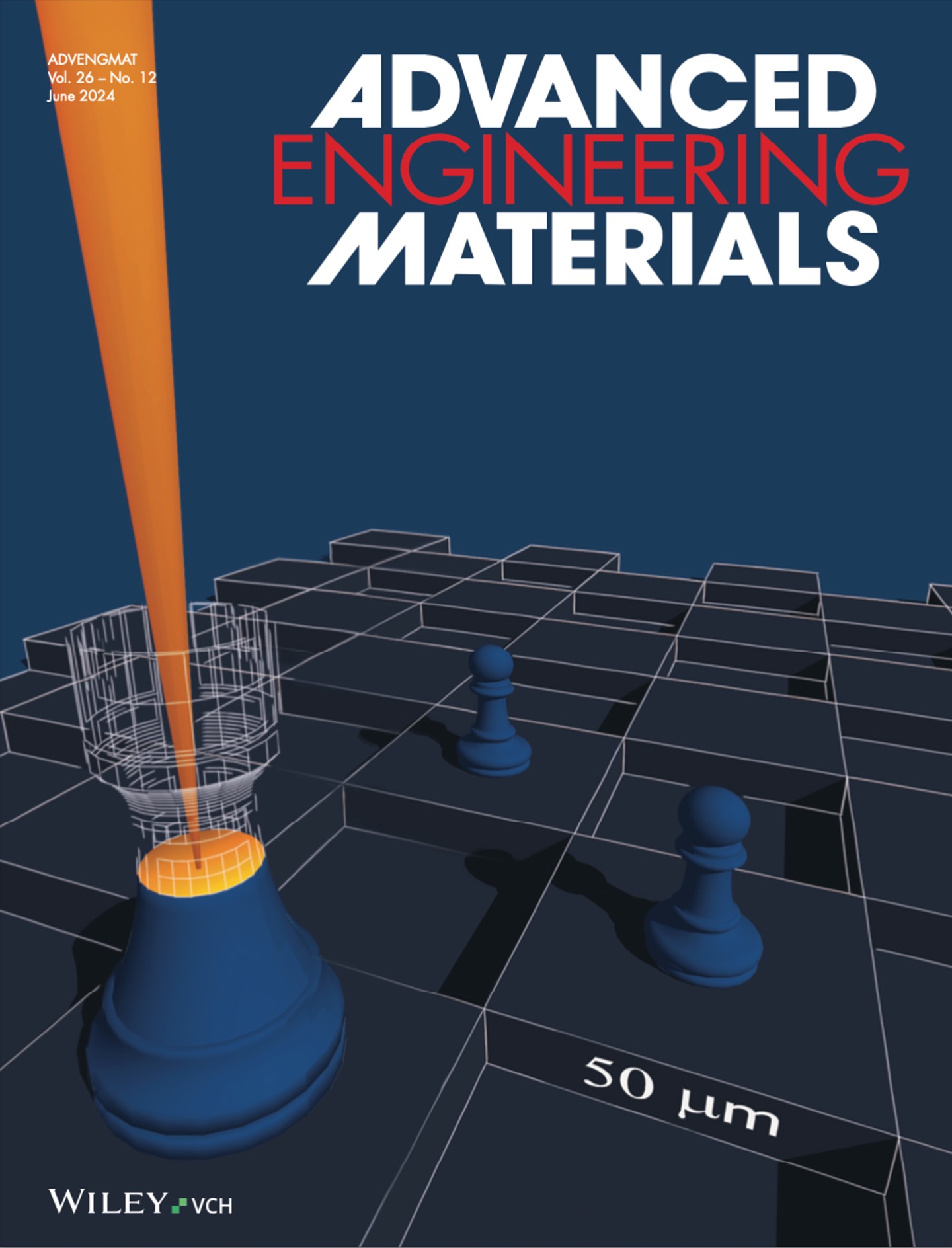 Our research extends beyond organic photoresists. We are developing hybrid and inorganic materials tailored for two-photon microfabrication, offering unique properties for specialized applications.
- Hybrid Photoresists: In collaboration with TotalEnergies and Microlight3D, we have created organosilane-based resins compatible with both 2D maskless lithography and two-photon microfabrication. These materials form robust 3D networks through a combination of radical polymerization and condensation reactions.
- Zirconia Nanoparticle Resins: Our zirconia-based photoresists are designed for nanoparticle high-load applications. The small, functionalized nanoparticles ensure stable dispersion, resulting in printed structures with low shrinkage, excellent mechanical properties, and high refractive indices (>1.7). These materials also withstand thermal treatment and organic removal without structural collapse.
Impact and Collaborations
Our work is supported by European fundings (KET, Eurostars), the French National Research Agency (ANR), and regional innovation agencies. We actively collaborate with industrial partners to translate our discoveries into real-world applications, particularly in optics and advanced materials. By advancing photoinitiator design, process development, and inorganic resins, we are not only pushing the boundaries of fundamental science but also fostering innovation for industry.
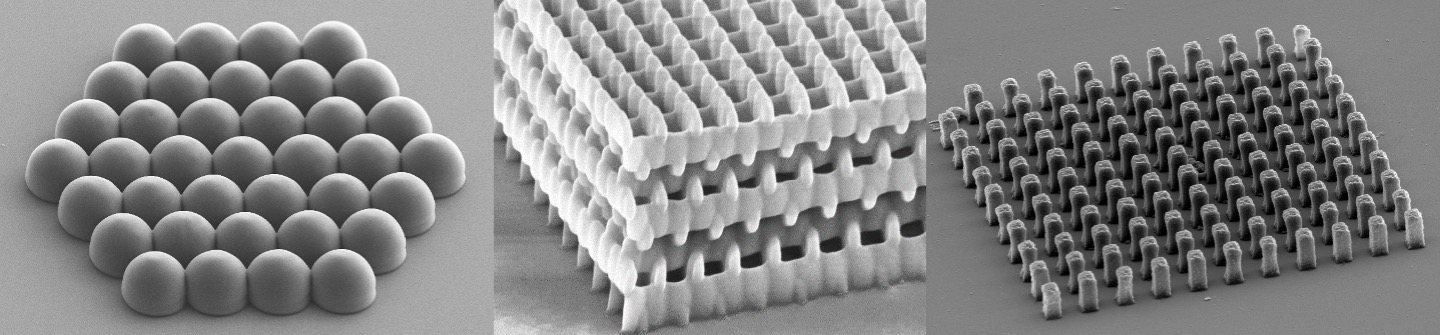
We welcome collaborations and inquiries from researchers, students, and industry partners. Whether you are interested in fundamental studies or applied projects, our team is eager to explore new ideas and partnerships.
Join Our Team
We are always eager to welcome motivated researchers and students who share our passion for high-resolution nonlinear 3D printing and advanced microfabrication. Even if specific positions are not currently advertised, we encourage you to reach out if our research aligns with your interests.
Current Opportunities
- COMING SOON! PhD opportunity: PhD in two-photon microfabrication. Start date: 09/2026
- COMING SOON! Postdoc opportunity: Synthesis of high performance photoinitiators for two-photon microprinting. Start date 09/2026