


Mathieu Couttenier, professor of economics at ENS de Lyon and director of the CERGIC laboratory, has published L’Économie de la violence with Les Léonides (publisher).
Through his book L’Économie de la violence – À qui profite la guerre ? Enjeux et solutions (The Economy of Violence – Who Benefits from War? Issues and Solutions), published on October 1, 2025, by Les Léonides, Mathieu Couttenier, professor of economics at ENS de Lyon and director of the CERGIC laboratory, offers clear insights and analytical tools to better understand global conflicts and their economic implications.
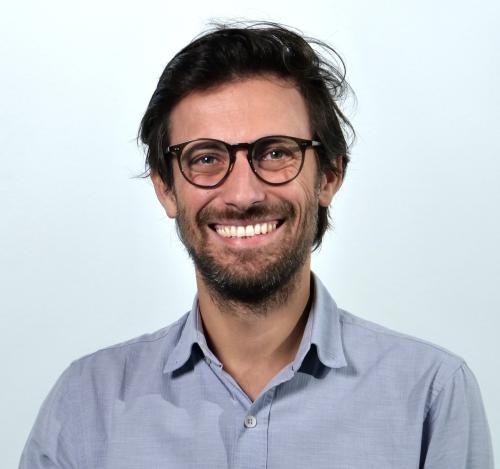
Mathieu Couttenier © DR
Who is this book for?
For everyone, except my colleagues! (laughs) It’s really aimed at the general public, with the idea of combining a solid scientific foundation with intellectual rigor in the way the arguments are presented. The book is not meant to be a textbook, but rather a review of the literature and available data at a given point in time. Its goal is to provide keys for understanding and offer tools that readers can use to think and debate more clearly and critically.
What do you hope readers will take away from this essay?
The main objective is to provide an accessible book with a comprehensive framework for understanding both the determinants and the costs of conflicts, as well as what economic research can tell us about public policies and their positive or negative effects. The idea is to offer an analytical lens and to show that economists, too, have valuable insights to share on these issues. In this sense, the book complements the work of historians, sociologists, and anthropologists, and it also aims to foster dialogue between different fields of research.
You mention Ukraine and the Israeli-Palestinian conflict, but not only those…
Indeed, those are the two conflicts that immediately come to mind, since they dominate the headlines. But in reality, my focus is more on civil wars, because the vast majority of violent events that occur around the world are civil conflicts. These involve either armed groups fighting against the government or groups fighting each other within the same country. The causes and consequences of conflicts can be very different depending on whether they are civil or interstate. So, while I do discuss the war in Ukraine and the Israeli–Palestinian conflict to some extent, the book is mainly grounded in a large body of international academic research on the understanding of civil wars.
It is also important to remember that the issue of conflict did not suddenly emerge in 2022. When you look at the data, you see a broad increase in violence since around 2010. This is not a new phenomenon, and neither is the interest of economists in studying it.
What motivated you to write this book?
My first motivation is that, as an academic and researcher, I believe it is extremely important to engage the general public with the research topics we study.It seems essential to me to be able to communicate. In the noblest sense of the word “popularization,” this includes what we learn and know from our own research, as well as that of our colleagues.
My second motivation is that the issue of conflicts has returned to the headlines over the past two or three years, particularly since Russia’s invasion of Ukraine. It has received much more public attention, raising many questions. Between this current context and the fact that I had been developing the project for some time, I felt that it was the right moment to write the book.
Would you like to add anything?
I simply hope that this book will be useful to as many people as possible and that it will help readers grasp the richness of results regarding the determinants, consequences, and policies of conflicts. I tried to make it accessible to all audiences, even though as an academic it is sometimes difficult to know if the text is clear. It is easier when questions come from the audience!
In any case, I find it to be a wonderful adventure and an enriching exercise that aligns with my vision of an academic’s role: sharing knowledge beyond the academic sphere. It is extremely important that researchers participate in public debate on their areas of expertise, because their insights are needed today.
In the media
Marianne 02-10-2025 Mathieu Couttenier : "Comprendre les mécanismes de la violence, c’est déjà agir pour la paix"
France Culture 29-09-2025 Les économistes face à la guerre : l’impossible calcul du conflit et de la violence Podcast (accès libre)
Le Cercle des économistes 16-04-2024 Combien coûte la guerre ? Podcast (accès libre)