


Doctor Honoris Causa award ceremony for Hartmut Rosa, followed by a public lecture
19:30-21:15
Free
On December 15, 2025, ENS de Lyon will welcome Hartmut Rosa, sociologist and political philosopher. This will be an opportunity to award him an Honoris Causa Doctorate. Following the ceremony, he will give an exclusive lecture in the Mérieux auditorium at ENS de Lyon's Monod campus. This lecture, entitled “Acceleration, Alienation, and Resonance: Forms of Connecting with the World”, will be held from 7:30 p.m. to 9:15 p.m., in the presence of Christine Détrez, Olivier Hamant, and Lukas Pairon.
The discussion will be given in English.
This event is open to everyone, including students, staff, and the general public: registration is required.
The event will be live-streamed: access the live stream
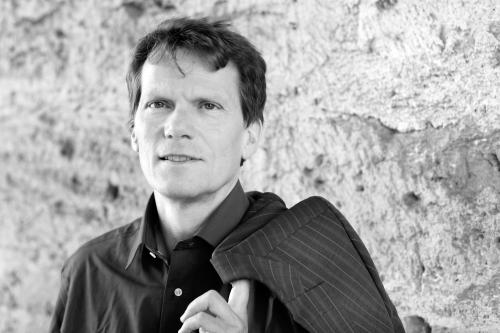
The German sociologist and political philosopher Hartmut Rosa is one of the leading contemporary thinkers in Critical Theory, a school of thought originating from the Frankfurt School, which analyzes the relationships between society, culture, and power. Since 2005, he has been Professor of General and Theoretical Sociology at Friedrich Schiller University in Jena. He works on topics such as “Diagnosis of the times and analysis of modernity,” “Normative and empirical foundations of social criticism,” “Theories of the subject and identity,” “Sociology of time and the theory of acceleration,” and “Sociology of international relations.”
Translated into some twenty languages, Hartmut Rosa's work has had a profound impact on contemporary sociology, particularly through his theory of resonance, which extends his critical reflection on modern acceleration and alienation. His publications include: The Uncontrollability of the World (translated from German), Cambridge, Polity Press, 2020; Resonance: A Sociology of Our Relation to the World, Cambridge, Polity Press, 2019; Social Acceleration: A New Theory of Modernity, Columbia University Press, 2013, Alienation and Acceleration: Towards a Critical Theory of Late-Modern Temporality, Cambridge, Polity Press, 2026.