


In New Delhi, French and Indian researchers and institutions gathered in February 2026 for the High-Level Academic and Scientific Meetings (RUSH), an event dedicated to scientific and academic cooperation. ENS de Lyon took part in roundtable discussions on AI and health, while also participating in numerous bilateral meetings to strengthen Franco-Indian partnerships.
On the occasion of the Summit on the Impact of Artificial Intelligence in New Delhi, attended by the President of the French Republic, the French Embassy in India organized the High-Level Academic and Scientific Meetings (RUSH) on February 18 and 19, 2026. This event brought together researchers, academic leaders, and higher education institutions and aimed to strengthen scientific and academic partnerships between France and India, a key driver for developing sustainable strategic collaborations.
ENS de Lyon, as coordinator of the BIOSANTEXC consortium within the Franco-Indian Campus for Life and Health Sciences, played an active role in the initiative. Working in coordination with the Franco-Indian Campus’s partners, the School played a central role in defining the scientific framework for the RUSH program and in organizing the session on artificial intelligence and health.
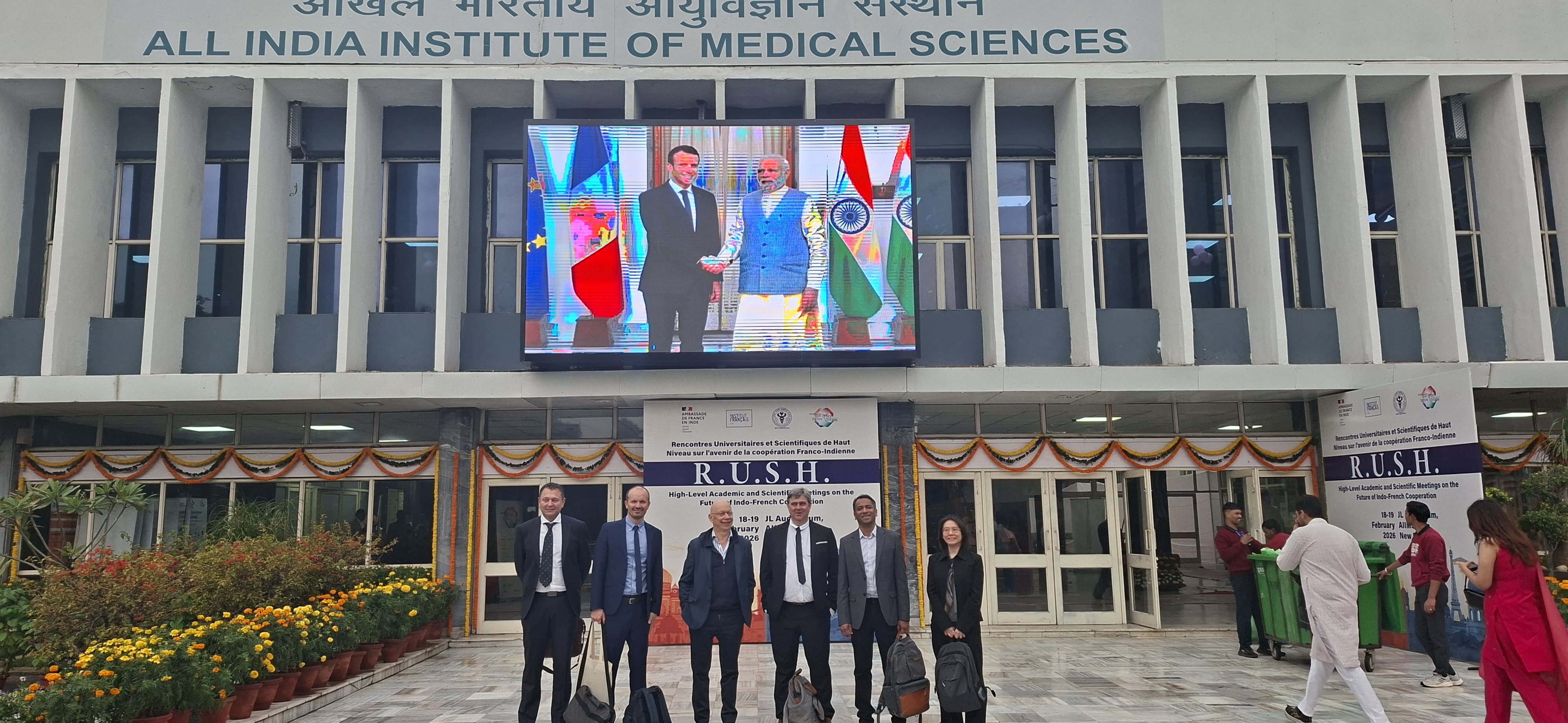
Emmanuel Macron’s Address: Promoting French Higher Education
While in New Delhi for the RUSH event, President Emmanuel Macron delivered a speech highlighting the global standing of French higher education and its key advantages for international students.
In particular, he emphasized the growing importance of interdisciplinarity, presented as an essential tool for addressing major contemporary scientific challenges. This approach is one of the defining features of the French academic system and is also at the heart of ENS de Lyon's education strategy.
He also highlighted:
- the excellence and quality of French higher education;
- the expansion of English-language programs, which help enhance the international appeal of institutions;
- the importance of preserving linguistic and cultural diversity, a value held in common by France and India.
Artificial Intelligence and Health: Three Scientific Roundtables
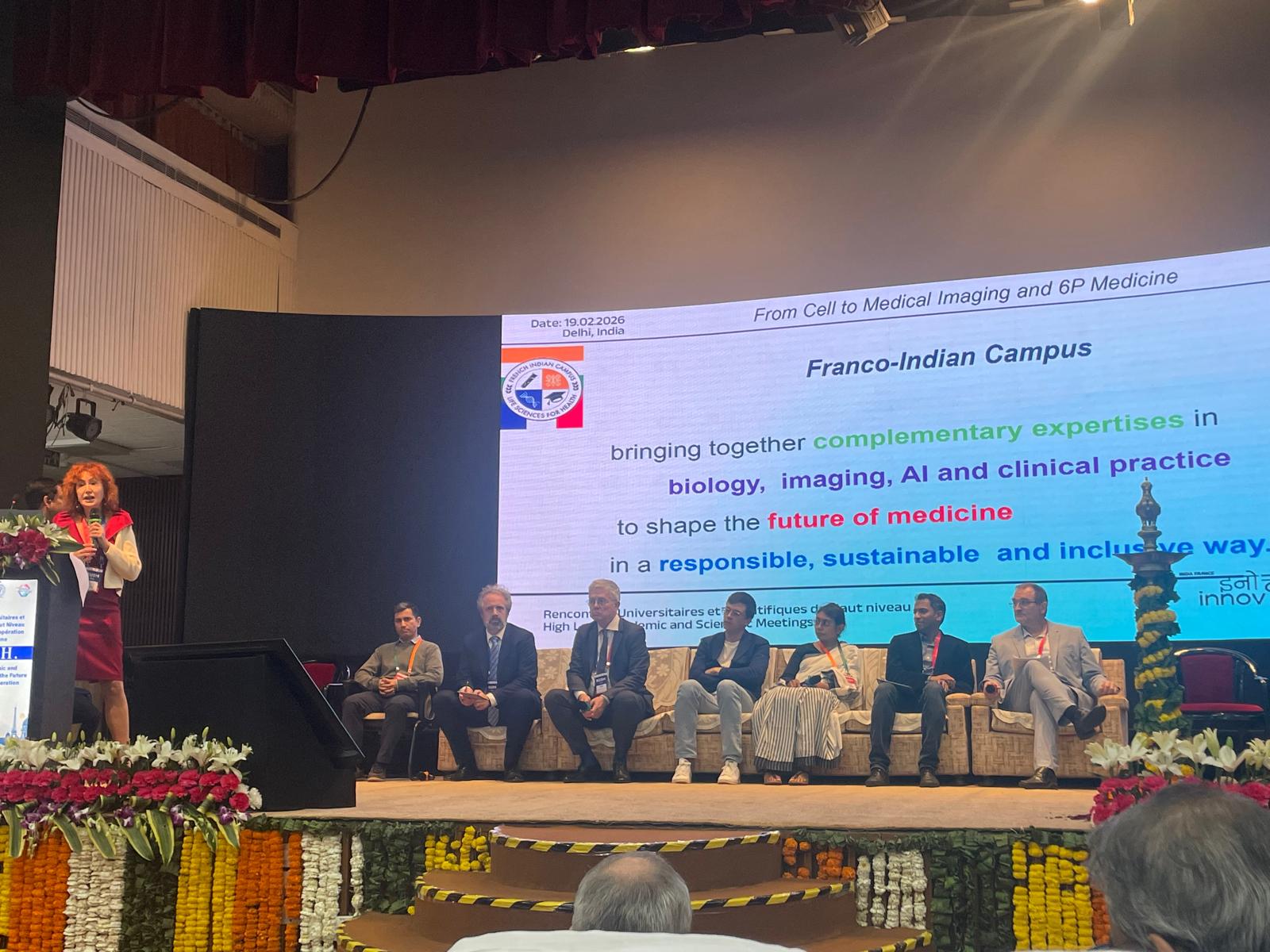
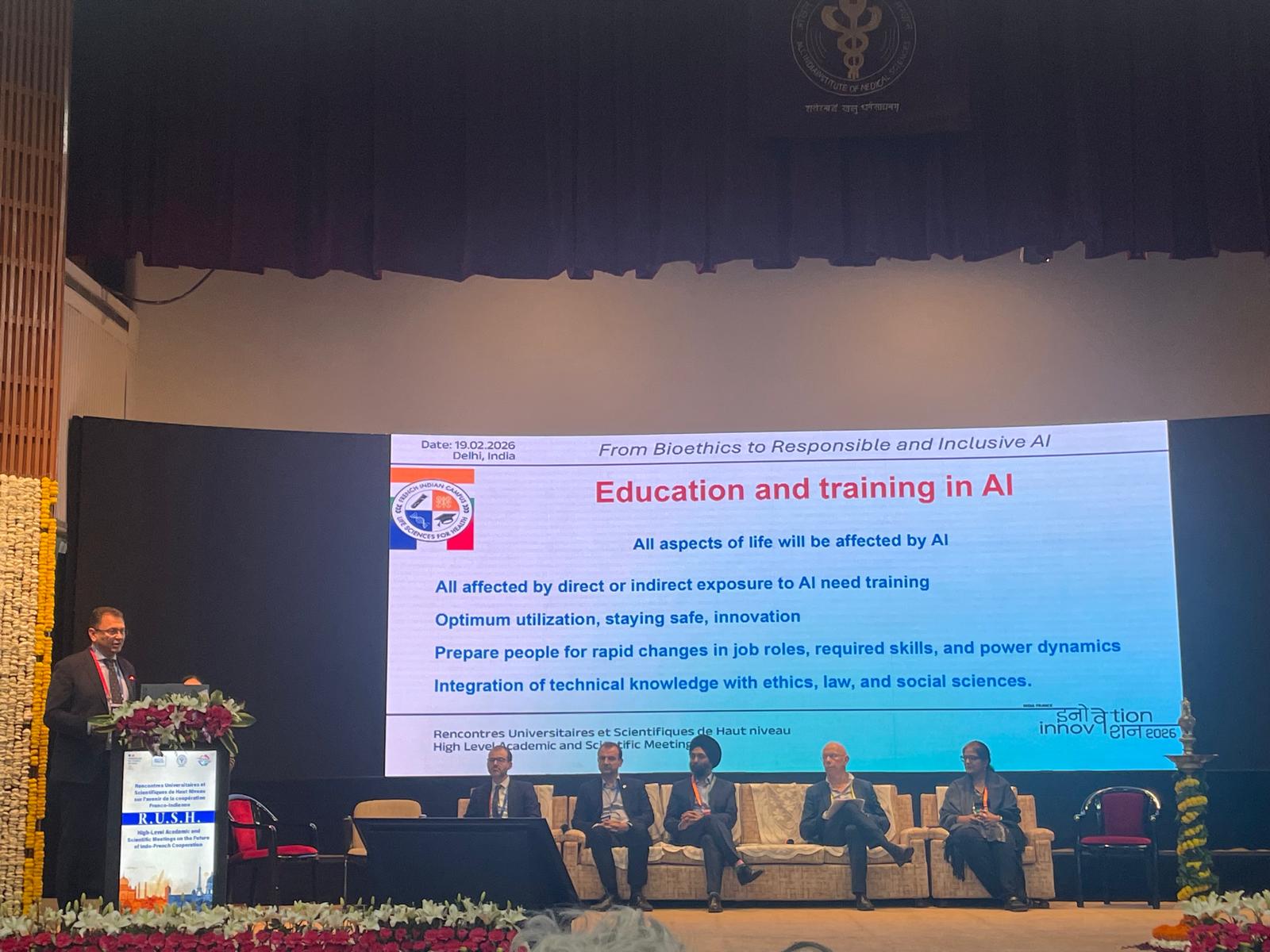
During the “AI & Global Health” session, organized by the Franco-Indian Campus and BIOSANTEXC, ENS de Lyon took part in discussions between researchers and academic leaders on the opportunities offered by artificial intelligence in the field of health.
The session was structured around three roundtables, bringing together speakers from the four projects of the Franco-Indian Campus.
Kiran Padmanabhan, INSERM Research Director and Team Leader at the Lyon Institute of Functional Genomics (IGFL), served as a panelist during the roundtable discussion titled “From Cell to Medical Imaging and 6P Medicine.” Stéphane Parola, full professor at the Chemistry Laboratory (LCH) and Vice President for Strategy at ENS de Lyon, introduced and chaired the session “From Bioethics to Responsible and Inclusive AI.”
Karin Kim Lim, Head of International Cooperation and Partnerships and coordinator of the Biosantexc project, also represented ENS de Lyon.
These discussions highlighted the central role of the Biosantexc consortium in fostering Franco-Indian scientific collaborations at the intersection of artificial intelligence, biomedical research, and global health.
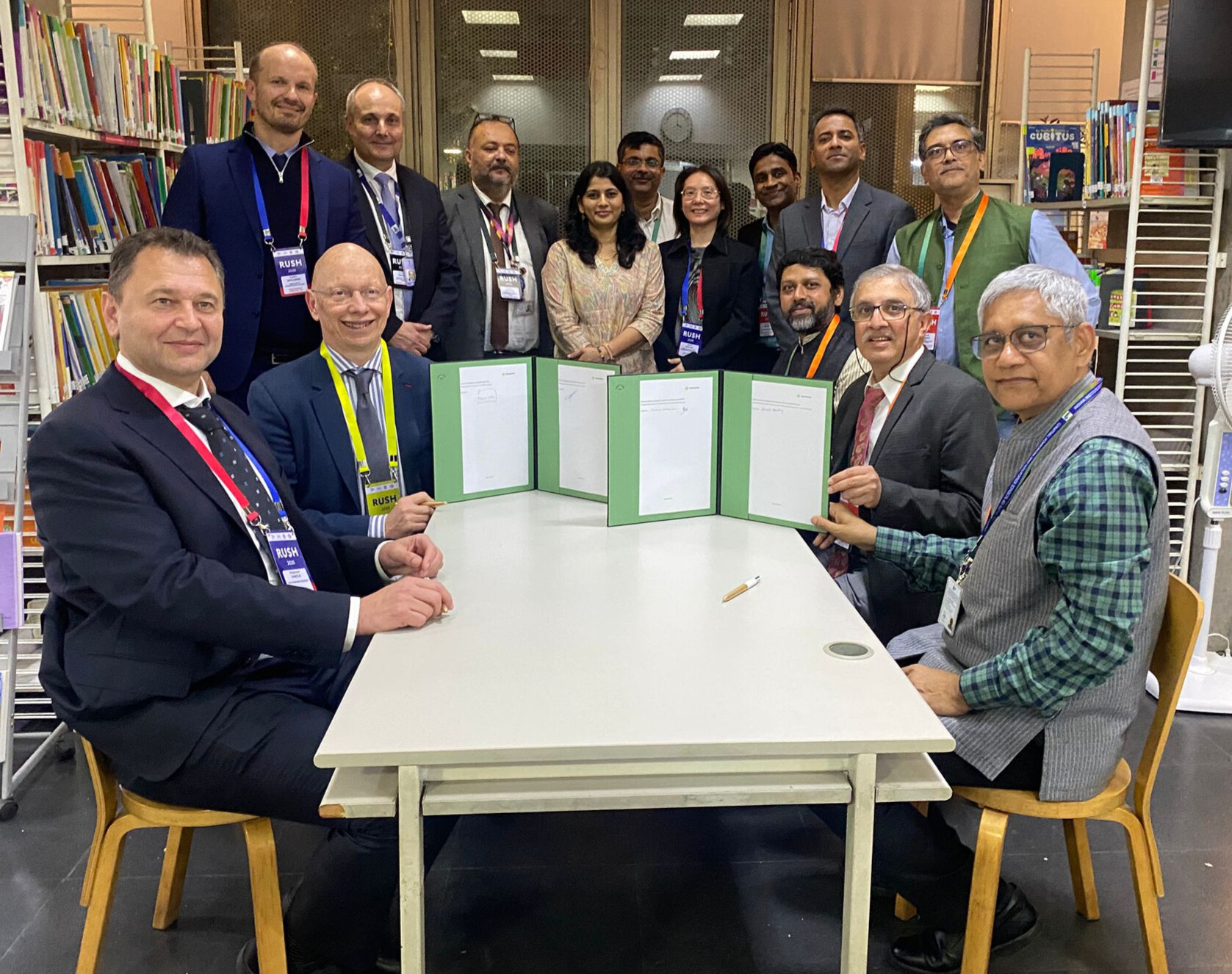
Signing of the Amendment to the Biosantexc Consortium Agreement
Another highlight of the RUSH event was the signing of the amendment to the Biosantexc consortium agreement.
This signing marks a new milestone in the development of this research network and confirms the momentum of cooperation among the partner institutions.
Bilateral Exchanges: Toward New Collaborations
On the sidelines of the official program, ENS de Lyon also participated in several bilateral meetings with Indian institutions to strengthen existing partnerships and explore new opportunities for collaboration in research, training, and academic mobility.
Among the institutions met were:
- IIT Bombay, specifically the Koita Centre for Digital Health (KCDH);
- IIT Gandhinagar;
- as well as other academic partners involved in the Franco-Indian Campus projects.
Discussions have also been initiated with several Indian Institutes of Science Education and Research (IISERs)—including those in Mohali, Pune, Bhopal, Thiruvananthapuram, and Tirupati—with a view to strengthening existing collaborative networks. These discussions focus on establishing joint PhD supervision arrangements and joint doctoral programs.
Informal discussions have also taken place with the National Centre for Biological Sciences (NCBS) in Bangalore and with IIT Delhi, particularly in the fields of basic sciences and the humanities and social sciences.
These discussions also paved the way for the establishment of memorandums of understanding (MoUs) with several partner institutions, as well as the organization of academic visits in the form of visiting faculty, with the aim of strengthening scientific and educational collaborations.
Ashoka University: A New Partner of ENS de Lyon
The delegation from ENS de Lyon also visited Ashoka University, a new partner of the institution.
This visit helped advance discussions on bilateral cooperation, particularly in the areas of research and training. Ashoka University is also a member of one of the consortia of the Franco-Indian Campus, thereby opening up opportunities for broader scientific collaboration.
Ultimately, this partnership could promote student mobility (Master's level internships) as well as exchanges between researchers and PhD students.
A forward-looking partnership
In this spirit, and with 2026 marking the Franco-Indian Year of Innovation, the School plans to organize several events dedicated to strengthening these collaborations, including an India Day at ENS de Lyon in June, a BIOSANTEXC workshop in India in July, and an “immunology/virology” summer school at the start of the next academic year.