


Isabelle Baraffe, member of CRAL, Corentin Herbert, member of LPENSL, and Édouard Bonnet, member of LIP, as well as nine alumni of ENS de Lyon – Charles-Édouard Brehier, Émilie Capron, Jeanne Costante (Crassous), Éric Falcon, Louis Fayard, Pierre-Olivier Lagage, Yvon Maday, Hubert Saleur, and Jérémie Szeftel – have been distinguished at the 2025 French Academy of Sciences awards ceremony. Thumbnail photo © All rights reserved.
The winners of the 2025 French Academy of Sciences awards were announced on Tuesday, October 28. Among them are three researchers from ENS de Lyon: Isabelle Baraffe, CNRS research director at the Lyon Astrophysics Research Center (CRAL) and professor on secondment at the University of Exeter (England); Corentin Herbert, CNRS researcher, Physics Laboratory of the École normale supérieure de Lyon (LPENSL); and Édouard Bonnet, CNRS researcher, Laboratory for Research in Parallel Computing (LIP). Nine alumni also received awards, namely Charles-Édouard Brehier, Émilie Capron, Jeanne Costante (Crassous), Éric Falcon, Louis Fayard, Pierre-Olivier Lagage, Yvon Maday, Hubert Saleur, and Jérémie Szeftel.
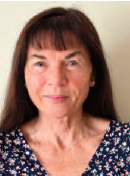
Isabelle Baraffe, Médaille de section
CNRS Research Director, Lyon Astrophysics Research Center (CRAL) and visiting professor at the University of Exeter (England).
Isabelle Baraffe's work focuses on the structure and evolution of stars and planets, covering a wide range of physical fields, with remarkable contributions to the study of exoplanets, brown dwarfs, and low-mass stars. She is currently developing innovative and promising multidimensional stellar and planetary models for the study of fundamental processes.
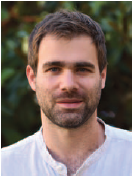
Corentin Herbert, Foundation Simone and Cino del Duca grant
CNRS researcher, Physics Laboratory of the École normale supérieure de Lyon (LPENSL).
Corentin Herbert is interested in extreme weather events, such as heat waves and abrupt transitions in atmospheric or ocean circulation, and their impact on the climate. His work aims to develop new theoretical and numerical tools, inspired in particular by statistical physics, to better understand the physical mechanisms underlying these events, simulate them, and predict them.
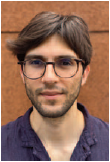
Édouard Bonnet, LIP, Lovelace-Babbage Prize
CNRS researcher, Laboratory for Research in Parallel Computing (LIP).
Édouard Bonnet studies how to leverage the structure of graphs or networks that model most real-world systems to more efficiently solve classic combinatorial problems. Together with colleagues, he introduced a “twin-width” graph parameter, which paves the way for new algorithms and unifies and generalizes many widely-known results.
Nine distinguished alumni
Charles-Édouard Brehier, awarded the Blaise Pascal Du Gamni-Smai Prize
Professor at the University of Pau and Pays de l'Adour, Laboratory of Mathematics and their Applications in Pau (LMAP). ENS de Lyon (1987-2009) – 2006 – Sciences competition.
Charles-Édouard Brehier studies numerical methods for stochastic differential and partial differential equations. Together with his colleagues, his work aims to build, analyze, and test innovative algorithms to accurately simulate these random systems. He has also worked on the simulation of rare events. He is also interested in the applications of stochastic models in physics.
Émilie Capron, awarded for scientific research in polar and subpolar regions
CNRS researcher, Institute of Environmental Geosciences (IGE). ENS de Lyon (1987-2009) – Earth Sciences – 2004.
Émilie Capron reconstructs past climate change based on the analysis of polar ice cores. As part of her Mogpa Hotclim project (2020-2026), she is studying climate and carbon cycle variations during periods marked by polar warming similar to that predicted for 2100. Her results serve as test beds for evaluating the models used to make climate projections for the future.
Jeanne Costante (Crassous), awarded the Clavel-Lespieau Prize
CNRS Research Director, Rennes Institute of Chemical Sciences (ISCR). ENS de Lyon (1987-2009) – 1989 – Science competitive examination.
Jeanne Crassous explores chiral molecules (molecules with non-superimposable mirror images), from their preparation (helicenes, chiral organometallic complexes) to their photophysical and chiroptical properties (absorption and emission of polarized light), in order to understand fundamental processes (parity violation, spin effects) and their applications (polarized electroluminescence diodes).
Éric Falcon, awarded the Joannidès Prize
CNRS Research Director, Complex Matter and Systems Laboratory (MSC). ENS de Lyon (1987-2009) – Matter Sciences – 1993.
Éric Falcon studies wave turbulence, solitons, granular media, and hydrodynamic turbulence through a variety of experiments: in the laboratory, in zero gravity, and in large wave tanks. In particular, he has highlighted new phenomena emerging from a set of random waves in nonlinear interaction, leading to a better understanding of ocean surface waves, hydroelastic waves in geophysics, and magnetohydrodynamic waves in astrophysical plasmas.
Louis Fayard, awarded the Jaffé Prize
Emeritus Research Director at the CNRS, Irène Joliot-Curie Laboratory of Physics of the Two Infinities (IJCLab). ENS Saint-Cloud – 1974 – Science competitive examination.
Louis Fayard participated in experiments at CERN: first UA2, with the study of jets, the discovery of the W and Z bosons, and the first measurement of the mass of the W boson; then NA48, with the discovery of direct CP symmetry violation in neutral kaons; and finally Atlas, where he contributed to the discovery of the Higgs boson and the measurement of its properties, especially its mass.
Pierre-Olivier Lagage, awarded the Astrophysics and Space Sciences Prize – CNES
Research Director at the CEA, Astrophysics Department, Astrophysics, Instrumentation, Modeling Laboratory (AIM). ENS Saint-Cloud – 1977 – Science competitive examination.
After completing a theoretical thesis on the acceleration of cosmic rays, Pierre-Olivier Lagage specialized in the observation of the cosmos in the infrared domain. He is the French scientific lead for the development of several innovative instruments for ground-based and space telescopes, notably the Miri instrument on the JWST, which he uses to study the atmospheres of exoplanets.
Yvon Maday, awarded the Médaille de Section
Professor at Sorbonne University, Jacques-Louis Lions Laboratory (LJLL). ENS Saint-Cloud – 1976 – Science competitive examination.
Yvon Maday's research focuses on mathematical modeling, methods and algorithms for scientific computing on parallel and quantum architectures, and complexity reduction techniques. The ERC Synergy EMC2 project in computational chemistry, the Centre d'été mathématique de recherche avancée en calcul scientifique (Cemracs), the Carnot Smiles Institute, and the Obépine Scientific Interest Group, which he co-founded, illustrate the interdisciplinary nature of his research.
Hubert Saleur, awarded the Ampère Prize by Électricité de France
Researcher at the CEA, Institute of Theoretical Physics (IPhT) and professor at the University of California, Los Angeles (UCLA). ENS Saint-Cloud – 1980 – Science competitive examination.
Hubert Saleur studies physical problems in regimes of very strong interactions or out of equilibrium by elucidating and exploiting the mathematical structures (such as generalized symmetries) of quantum field theory. He is particularly interested in critical phenomena, mesoscopic systems, quantum electronics, and geometric statistical problems.
Jérémie Szeftel, awarded the Madame Mergier-Bourdeix Prize
CNRS Research Director, Jacques-Louis Lions Laboratory (LJLL). ENS de Lyon (1987-2009) – 1997 – Science competition.
Jérémie Szeftel is an expert in partial differential equations in physics. He recently proved the asymptotic stability of low-rotation Kerr black holes for Einstein's equations of general relativity. He also described the formation of singularities in finite time for compressible Navier-Stokes equations in fluid mechanics and for the nonlinear Schrödinger equation with supercritical energy defocusing.