


CIRI PhD student Amandine Chantharath and LIP PhD student Anne Gagneux are winners of the 20th edition of the L’Oréal-UNESCO For Women in Science France Award, the winners of which were announced on Tuesday, October 6, 2026. Thumbnail: From left to right: Anne Gagneux © All rights reserved and Amandine Chantharath © Elisa Llop
The L’Oréal Foundation, in partnership with the French Academy of Sciences and the French National Commission for UNESCO, announced the 2026 winners of the L’Oréal-UNESCO For Women in Science France Award on Tuesday, October 6. Now in its 20th year, this award honors 35 doctoral and postdoctoral researchers whose work contributes to addressing the major scientific challenges of the future. Among the winners are two PhD students from ENS de Lyon: Amandine Chantharath, a PhD student at CIRI, and Anne Gagneux, a PhD student at LIP.
Amandine Chantharath, CIRI, “Developing Therapies of the Future” category
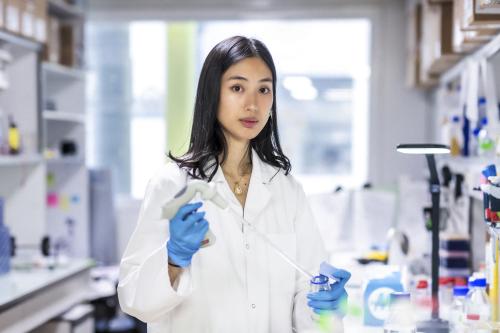
Amandine Chantharath is a PhD student and researcher in immunology and virology at CIRI—the International Research Center in Infectious Diseases (CIRI—Inserm/CNRS/UCBL/ENS de Lyon). As a member of the team dedicated to host-pathogen interactions during lentiviral infection (LP2L), she has been recognized in the “Developing Therapies of the Future” category for her research focused on the diversity of immune defenses in living organisms.
“All living beings, from animals to bacteria, face infectious agents such as viruses. To survive, they have developed a wide variety of defenses over the course of evolution,” explains Amandine Chantharath*. “I’m exploring these immune defenses, particularly in species that have not yet been extensively studied. This knowledge can inform so-called biomimetic solutions—that is, solutions inspired by the mechanisms developed by living organisms. For example, by studying how bacteria resist viruses, researchers discovered CRISPR, the tool used to modify DNA.”
Anne Gagneux, LIP, category “AI and Modeling: Anticipating and Shaping the Future”
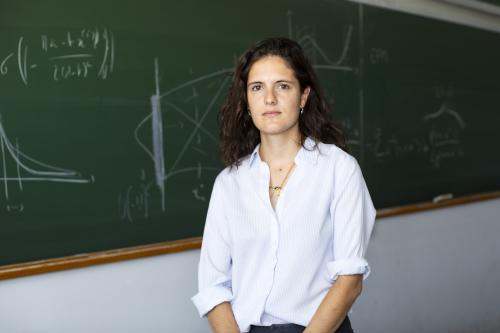
Anne Gagneux is a PhD student in machine learning at the LIP (Parallel Computation Laboratory). She conducts her research within the OCKHAM team, a joint project team between Inria, the CNRS, and ENS de Lyon, affiliated with the LIP. She has been recognized in the “AI and Modeling: Anticipating and Shaping the Future” category for her work on the creativity of generative artificial intelligence.
“I work on generative artificial intelligence—tools capable of creating images,” explains Anne Gagneux*. “In the short term, I design models to restore images: removing a logo, or sharpening medical and astronomical images. I’m trying to understand where these models’ creativity comes from—that is, their ability to invent. In the long term, the challenge is to bridge the gap between their performance and our limited understanding of how they work. Understanding them better means being able to use them reliably in demanding environments, such as in medicine or industry.”
Established in 2007, the L’Oréal-UNESCO For Women in Science Award annually honors young female researchers at a pivotal moment in their careers. In addition to a cash prize, the laureates receive mentorship and a leadership training program designed to support the development of their scientific careers.
This year, nearly 820 applications were reviewed by a jury composed of more than 50 members of the Academy of Sciences. The laureates represent a wide range of disciplines, from biology and computer science to physics, mathematics, and Earth and space sciences.
Beyond recognizing scientific excellence, the L’Oréal-UNESCO For Women in Science program aims to promote women’s roles in research and inspire future generations. Since its inception in 1998, it has supported more than 5,000 female researchers from over 140 countries worldwide.
* Source: L’Oréal-UNESCO For Women in Science Press Kit – France 2026 Awards